Friday, July 29, 2011

Lucian Freud

Lucian Freud died a week ago. His death surprised me, somehow. I'm not entirely sure why I thought he'd live forever--maybe it's because his last name always had him pegged as someone who came after something else long gone. Maybe because his paintings did not age that much compared to other artists. His nudes, especially, do not date.


Like a lot of people, I have been a little drunk on Freud's paint and palette from looking at his paintings so much since his death. It's the nudes that want my attention.

There has been a lot of intelligent commentary on his paintings of the human body, but there still seems to be a sense at times that his paintings of large people were grotesque. Some of the more pointed phrases from obits and tributes:
  • "showing off the human figure in all its gorgeous, swollen, egregious fleshiness" (Independent)
  • "The flesh [of Freud's nudes] was mottled, lumpy and, in the case of his 1990s portraits of the performance artist Leigh Bowery and the phenomenally obese civil servant Sue Tilley, shockingly abundant." (New York Times)
  • "Almost all of us carry an image of a 'Freud' around in our minds – a gracelessly posed, grossly sagging woman, perhaps, or a face sculpted in paint that appears to fold and puff like a cauliflower ear." (Telegraph)
  • "Astonishment, even disgust, often greeted Lucian Freud’s paintings when they first appeared. In Benefits Supervisor Sleeping a mountainous friend lay snoozing on a sofa, one blubbery breast cupped in a hand, revelling in rolls of fat like a beached whale." (Economist)

I don't know much about how Freud's paintings of large people were received in their time, but I can believe that they shocked then. I can see that they still shock now.


I do not think of Freud as a fat person painter. He's not Jenny Saville or Botero. I think he painted the human body (and other animals) with complete integrity, in the sense that his view of things was whole and consistent from one subject to another, whatever their size. Other than one painting--Evening in the Studio (1993)--I don't see anything that particularly editorializes in the way he has his fat subjects posed, and even then I'd argue he does the exact same with smaller models, in works like Painter and Model (1987) and The Painter Surprised by a Naked Admirer (2005) (also featuring clothed/unclothed models). All his subjects are under the same eye, including himself at times.


The man really did paint what he saw as he saw it: veins, fat, skeletal structure, hair, flopping breasts and genitals, muscle mass, skin; most of his models lying, leaning, splayed, pitched over, bent, draped, slumped. Pushed or fallen over. Not many stand.

He famously said:
I'm really interested in people as animals. Part of my liking to work from them naked is for that reason. Because I can see more, and it’s also very exciting to see the forms repeating through the body and often the head as well. I like people to look as natural and as physically at ease as animals, as Pluto my whippet.
In the same show catalog from which that quote comes it was also written:
In the sense that they are at their most animal-like when resting or sleeping, those who sit for Freud trust him to bring out the animal in them.
I think his paintings of fat people shock only because of the subject matter and the fact that he chose to paint them--and because we are still shocked by images of fat nudes--not because of how he painted them. We're all animals in his work: all fleshy, hairy, mortal, pulled on by gravity and age, doing the hard work of being still as time passes.


Wednesday, July 13, 2011

the voluptuous nudes of Norman Lindsay

There are many nudes by the prolific Australian artist Norman Lindsay (1879-1969) to be found and enjoyed! (This, despite the fact that he lost a lot of his work in a 1940 fire.) The dude loved naked women. And Sirens isn't the world's worst movie if you want to get a look at Lindsay's home (where they filmed it); a fluffy film, but not too terrible. Hugh Grant is extremely well cast as the earnest and blushingly pervy vicar.

p.s. This is my copy of Lindsay's children's book The Magic Pudding--I think it might have been my my mother's or her siblings; it's an American edition from the 1930s. The illustrations are great. Love the aminals!

Tuesday, July 12, 2011

"Is childhood obesity proof that not all parents love their children?"

Dr. Michael Katz came to my attention in April because of a thread he started at TED.com, entitled: Is the Childhood Obesity epidemic proof that not all parents love their children?

I thought it was a joke at first, but it turns out Katz is a doctor who runs the--let's get this out of the way now--unfortunately named website EatingKids.com, the K of which is seemingly capitalized to discourage the sense that the site is about the best way to sautee toddlers (I'm not sure it helps). EatingKids is devoted to childhood eating issues, "created not only to provide information, but to create a collaborative community of parents, doctors and educators who could fuel each others' passion to eliminate Eating Disorders & Childhood Obesity."

The dude seems well-intentioned, and the site includes, for example, a lot of good ideas about managing the onslaught of damaging media imagery for young girls with eating issues. But the parts of the site devoted to childhood obesity demonstrate the same thinking that fueled the TED question:
Obesity is a disease. It is also totally avoidable. While there do exist some genetic and thyroid deficiencies that can contribute to obesity – these are extremely rare.

As a rule: you show me an obese child and I’ll show you parents who are not doing their job.
Katz's question--can parents of obese children actually love them, given that they are fat?--makes a certain horrible sense in the context of our culture's current understanding of fat and especially children who are fat. It is the natural next thought in a world where body size is always and ever the result of what you do or don't do, and what you teach your children to do and do for them. If fat is a failing, then fat children are their parents' failure. If fat = death, then parents who 'let' their kids be fat are killing them. They do not love them.

So Katz tries it out on TED. Here are some of Katz's comments, taken from the thread. He wrestles with the do-they-love-them question as he considers the fact that this cannot all be an issue of information/knowledge:
Considering how many children are obese in the USA we can safely assume that not ALL the parents are ignorant of these factors. In fact, I think it is safe to say that most parents DO understand them - which is why I asked the question in the first place.
- - -
First, I TOTALLY reject the notion that a parent could truly LOVE their child, yet somehow NOT be able to feed the child a healthy diet on most days. ALL the stories you hear about fruits/veggies being more expensive than fast food are lies and I can prove it on any trip to the supermarket. I don't mean to be aggressive here, but I am truly SICK of that kind of false "meme."
- - -
I see this same thing happen time after time in these online "debates" and I'm beginning to get annoyed. I said what I said and there's no reason to cook up some false extrapolation about what I said. So, let me be clear: Based on what I've seen in my life, as a physician and as a person on this earth, I do not believe that all parents really love their children. I was interested to know if Childhood Obesity could be seen as a proof of that. That's about as far as I wanted to take it.
- - -
...If you love someone I believe you will stop [harmful] behavior . . . the abusive husband who beats his wife out of frustration with his life could still actually and truly love her. I think that is NOT true. So if a mom feeds her kids pizza and potato chips and the like on a daily basis, with the kids growing ever fatter (and sicker), can we say she really loves them? I think not.
Not long after the TED discussion, Katz posted this page on his site under pretty much the same headline/title--"Childhood Obesity Epidemic: Do all parents love their kids?"--incorporating some of the responses he got at TED (including, in a few cases, quoting them word-for-word with no attribution in his "points," "questions," and "answers"). He quotes, by way of answer to his question, a line from somebody else's post: "It’s not as easy as yes or no."


But it's clear he still does not seem to know what to think about it all--how to reconcile his ideas and the facts. I think he's honestly trying to understand it. He goes back to the idea that people just do not know what they need to know. He wonders if perhaps institutions should step in if parents "would not" feed their children properly. In one of his points he wonders, if a parent's schedule is contributing to their child's obesity, whether or not they should quit:
Assuming that one’s finances make it possible, then “Yes,” quitting is probably reasonable. This may seem extreme, but my answer is “So is diabetes" [emph his]. Love for your children requires you to make certain sacrifices if they are really in the child’s best interest. In fact, if the decisions you make really ARE best for your child, then they probably shouldn’t be considered sacrifices at all. If you love someone I believe you will stop hurtful behaviors, and leaving your kids a frozen pizza as an after-school snack IS a hurtful behavior. So…if a mom feeds her kids pizza and potato chips and the like on a daily basis, with the kids growing ever fatter (and sicker), and this is a result of the fact that she’s at work and doesn’t have time to cook a healthy, nutritious meal, then can we say she’s really doing the best for her child? I think not.
Dr. Katz seems to have created an extremely narrow definition of healthy and normal at EatingKids.com. I have to wonder how his treatment and understanding of eating disorders is informed by his understanding of obesity.

And it may "make sense" in our world, but it is still appalling to see this guy wrestle with the idea of the amount of love in a child's life--love--trying to get his mind around and explain body differences. Let me answer the question for him, by the way: no, actually, childhood obesity is not proof that not all parents love their children. It's proof of a lot of things, including socio-economics and genetics, which Katz dismisses, as well as food choices. If the standard statistic that one in three children is obese is true, that means he is honestly wondering if one-third of American children are not loved. That right there--the fact that he is positing the question at all--should tell him this is more complicated than the factors he sees at hand. He's answered his question already. The fact that he persists in it at all seems too appalling and dehumanizing to believe. But that is the world we live in.

Katz has also written a book about orthorexia; would be interesting to check it out.

check it out

The Museum of Obeast Conservation Studies!


...created by Rachel Herrick. "Her installation-based work spans a wide variety of media including sculpture, video, photography and performance. Herrick’s pseudo-scientific museum exhibitions document the field of study around the North American Obeast, a genus of mammals she invented to satirize fat bias and the cultural panic surrounding the obesity epidemic."

Monday, July 11, 2011

On Megan in Bridesmaids


I don't know what to say. I saw the movie twice. I took notes. I tried to keep an open mind. I didn't read any articles (because I'm weird like that sometimes, but also) because I wanted to have an unshaped reaction to it all. But ungh. Megan still kind of broke my heart.

I hate calling out Melissa McCarthy, who is great, gets a lot of screen time and in some ways steals the show. I love her--I think she's a great actress and comedienne. And I liked that Megan turns out to be the "together" character. And I liked the movie all right (Maya Rudolph is just wonderful).

But what the fuck. Is this the only way we can let a fat person into a mainstream movie, by making them as out of it, as weirdly-dressed and outsider as possible--arriving in the form of some weird stereotype? Does it make us that nervous to have a fat actress as just a another character?

Megan is definitely the Zach Galifianakis of this movie--the giant clueless toddler with no sense of social norms. McCarthy being a very pretty woman, effort is needed (and expended) to make her to look weird. Her makeup is handled differently than the other female characters--she's made up (or not at all) in harsh ways. Her clothing is unflattering and full of ZG-like touches--arm braces, etc.--as well as being strangely mannish (paired with pearls) and tailored in awkward ways. She gallops around, flops over couch backs, is sexually rapacious in unwanted ways as only fat people are in movies.


Okay, she's weird. Her character has a right to be weird. McCarthy's good at it! But it feels, watching it, as if the makers of Bridesmaids were so nervous at the thought of McCarthy on the same footing as the other actresses who, while all having personality quirks, were allowed to look semi-normal in Hollywood ways, that they make her a freak. The only scene in which McCarthy's makeup and wardrobe is treated as the others is the final scene when she is in bridesmaid wear and it suddenly becomes clear on what a different footing she has been treated through the movie because she looks gorgeous.


The absolute worst part of the movie is the little coda during the end credits of a videotaped homemade sex scene between Megan and her boyfriend. It's a lame sight gag involving a sandwich that makes it clear that people think fat people fuck food, not people. It was just miserable to watch (twice).

I feel like my original guess about the movie was right: McCarthy is miscast. She would have been a great lead and Kristen Wiig would have been a good Megan. I like Wiig a lot, but didn't feel like she had the emotional range needed for the character, ultimately. McCarthy would have been great.

The best thing to come out of Bridesmaids with regards to McCarthy is that she is getting more high-profile work: the Knocked Up spinoff, and another Paul Feig movie with she and John Hamm as "unconventional lovers," about which I don't even know what to think. From where I sit it would make sense to just cast them as lovers, but you know--we'll see.

The Media Machine and the Bodies It Feeds On

There needs to be a new word for the editorial point of view demonstrated in the constant rotation of articles in the UK's Daily Mail devoted to the excoriation of the female form. Dysmorphomaniacal. Celebricorpusrabidity. Hyperbodyhyperactiviscrutiny. I used to take screengrabs in open-mouthed shock to document articles such as this:

or this:
or this:
...until I realized that the Daily Mail looks like that every day. Truly, every day of the year. It's a microscope! Photos catch female celebrities from multiple angles while chiding them for their clothing choices (too slutty, too demure, too fancy, too rumpled), their footwear (they went after Nigella Lawson for her bunions recently), their hair, their panty lines, for sweating while exercising--anything. Women intrusively photographed with telephoto lenses "flaunt" their (either) Perfect Bikini or Somehow Wrong--fat, old, thin, wrinkly--Body in their bathing suits. Every (transitory, misleading, temporary, sustained) facial expression or bit of body language captured in any still photograph is valid evidence of and captioned as part of whatever narrative about their love life the Mail is pushing--jilted, spinster, happy, cheated on, cheating. You can not win.

In a perverse way I almost (almost) admire the Daily Mail for its insanity. It's so thoroughly superficial, in the literal sense. It's only about how things look: an insatiable Gargantua of body scrutiny. It's not admirable, of course--it's awful--and I feel terrible for anybody caught in the papp's sights in the UK, for good or for ill. It all sucks, although in a kind of equal-opportunity way. Everybody/everything gets put out there.

Also, weirdly, humanity shines through sometimes--at least to my eyes. Bodies are just bodies, and you show enough of them, even with all the commentary, they just seem like...bodies. And in the meantime the Mail looks stupid, like a bully jumping up and down harassing somebody on a bus while no one pays attention. They make themselves look ridiculous.

I found a few recent articles chastising otherwise looks-sanctioned female celebrities for evidence of their age especially mean, even given the Mail's usual MO--although it proves this point. Both of the articles criticized the women's hands and arms. One was about Kirstie Alley:


and one was about Meg Ryan:

Their arms are a dead giveaway! The bracelet only brings more attention to Alley's 60-year-old hand! The summery dress only shows Ryan's bulgy veins! They're not getting away with their grand plan to...

...wait, what are these women getting away with? Nothing. Yes, they are aging female celebrities who engage in the dance of beauty ideals. WE ALL KNOW HOW IT WORKS. We all know what they--and we--are supposed to look like, what the requirements are and when people don't fit them. Being thinner (as Alley is for the moment) means she is OK, as is Ryan, but they both sadly, stupidly, forgot to magically de-age their hands. Boo-ya! Failure. The Mail grinds these women through the body ideals machine and finds them wanting, cleverly exposes the tests they don't pass, but the only 'weaknesses' it exposes is the machine itself. Because Christ almighty, old hands age. Bodies age.

It's shitty journalism and pointless crap and it does harm, but I can't help feeling that articles like this mostly point out the flaws in the media's body-scrutiny machine. Rather the way that this article in People does:

The article is about a dancer on "Dancing With the Stars," Cheryl Burke, who gained (she estimates) five to ten pounds a couple years ago while on break from the show (some estimates by other helpful people put it closer to 20); she also said at the time she went from a size 2 to a size 4. When photos of her in a bikini surfaced at this time she started getting a lot of flak. There was a story at that time where she defended her weight, and then this story in January detailing the the heartbreak of the original story...

Ungh, I can't keep up. Whatever. She gained weight, spouted the party line about "loving her curves" in public while panicking and dieting in private, then talked about it all later again. The point is that this is all this story is about: ten pounds. That's it. The media machine is fucked--because it exists, but also--if a ten pound-change triggers this kind of journalistic need (and note: there were two cycles of stories about this). You can see the spectre of money in it all--Burke gains attention for her autobiography and for the show--which creates its own impetus, but still. This is all we're talking about. Ten pounds. And 60-year-old hands. That's it. That's all. The trigger is filed down insanely low.

Unfortunately stories like this and the Daily Mail insanity are more convincing proof of a flawed system than the scrutiny tendered to people who "deserve" it--Alley, for instance, when she gained 90 pounds. Then somehow it's okay. Merited, even if we won't admit it. But lets take the proof where we can find it: if the detectors start blaring when there's very little to detect, maybe the machine is broken.

no "fat lady sings" puns in this post (from me)

Opera is a fascinating place to look at issues of size because sometimes fat people just have to exist there. That is not true everywhere, despite what fatphobes might think about this world in which fatness creeps ever upon us. It is easy to watch TV or pick up a magazine and find it curated free of fat people. But singing opera is a rarefied skill and sometimes size goes along with it, for reasons that are not well understood, including in their necessity.

As opera continues its fiscal quest to be relevant to modern opera-unfamiliar audiences and leverage its plots to fill seats (rather than turn people off), there is a lot of conflict about Looks. Creating a digestible, artistic, Thing. Deborah Voigt's dumping by Covent Garden and subsequent weight loss surgery, and Daniella Dessi's fight with Zefferelli after he berated her for her size, are obvious examples.

Opera's conflict over fat people on stage is different than the battle that goes on in other media, though, because to some degree, sometimes, fat singers have clout. Not the final word, and not enough clout, probably, but you cannot sweep--for instance--Stephanie Blythe under the carpet. The contralto of a lifetime cannot quite be dumped wholesale because you are uncomfortable with the fact that she is fat.

And still there are people who would do that. This piece about Lyndon Terracini, the artistic director of Opera Australia, is the most elaborately unchallenged defense of looks-related prejudice in opera I think I've read:
The fat lady has sung. And if Lyndon Terracini continues to get his way, she won't get an encore until she at least shifts some weight.

Lest the man charged with overseeing the future of opera in Australia be accused of sexism [whew], he is quick to point out that his shape-up-or-ship-out message applies to all performers, regardless of gender.

''If you're seeing a couple making out and one of them is obese, who wants to watch that?'' he says with a theatrical grimace. ''It's obscene. You just think, 'Jeez, for Chrissakes, don't let the children see that'.'' [emph. mine]

. . . If casting ''triple threats'' who can sing, act and look good helps spark an interest among people who think opera is only for the old and rich, then he makes no apologies for upping the unemployment rate of overweight singers.

''You go to a movie and you see people who look exactly right for that role,'' he says. ''They're consummate actors and they're completely involved in what they are doing, so their performance is totally believable.

''That's what I'd like in opera: for people to be fabulous singers, look wonderful and be completely and totally absorbed in their character. If you can't get off the seat, if you've got to sit on a rock all night, who believes that?''
His circular argument, boiled down, is basically: fat people are gross and we should not have them on stage to interfere with our suspension of disbelief that the world does not have them in it. So we won't. It's horrible, but refreshingly open, in a way, in the workings of its prejudice.

I can't help thinking that artistic decisions like this will bite people like Terracini on the ass. People who love opera adore good singers, and functioning prejudice like this can alienate even standard issue opera fans who would prefer thinner singers to look at. It's just not that simple. The reason? Opera happens in 3-D. You don't just look at it: you take a bath in it, listen to it, feel your body vibrate from it. Good singing is good singing. Nobody appreciates that taken away from them.

[Link via Brian of Red No. 3]

some ladies


Illustrations by Arthur Watts from Diary of a Provincial Lady by E.M. Delafield. "Cousin Maud" hung on my bulletin board for years...I especially love her.

Saturday, July 9, 2011

"Fat Kills"

I was reading Marilyn Wann's wonderful commentary in SFWeekly today when I found out Betty Rose Dudley had died. I didn't know her, but I knew her piece, "Fat Kills," quite well. It was much reproduced and still holds up as a beautifully shaped piece of short fiction. It's worth a read. I am so sorry to hear she's gone.

Thursday, July 7, 2011

luv!

...luv the bottle for Damiana liqueur, that is, which is reportedly based on an Incan goddess of fertility. I find the bottle design interesting for many reasons, including the fact that I think she looks rather pugnacious. Those look like fists--or almost-fists--to me, held low so she won't lash out, maybe, while you say something stupid. A powerful little woman. I wonder how she felt about being hoisted in the advert (below).

Tuesday, June 21, 2011

Mrs. Avoirdupois

If you don't already, I recommend you follow Mrs. Clarence L. Avoirdupois on Twitter or perhaps 'like' her Facebook page to enjoy her teachings. Her firmly sensible advice for the plump, offered in the face of life's confusing little challenges and the occasional ill-mannered boor, is both charming and pragmatic. Enjoy, plumplings!

Monday, June 20, 2011

Letter from a fat woman to a mother who is afraid her daughter will look like me


Dear Ma'am, walking down the street:

There are some things I know, and when I say "know" I mean I know. They burn holes in my brain. You should listen.

Every fat woman I know was wrong about what she looked like when she was younger. Every--and I mean every--larger woman such as myself whom I know has said, looking at a childhood photo, "Wow, I wasn't that big." Images from childhood, adolescence, high school, college. "That's how big I was?" "I thought I was so huge then--I was so normal-sized." "I wasn't big at all." I have lost track of the number of times I've had this conversation. I've lost track of how often I've heard women say these things: in astonishment for the first time; in unbelieving fury; with real grief; in matter-of-fact resignation. It's an ongoing rite of passage. It is downright shocking as an adult to see evidence that you used to fit in, when you were sure you didn't. Especially if you don't now.

And the time when it turns out we weren't very big at all--that's actually when we learned we were huge.

There is a particular impetus to the worry that gets attached to a growing body's perceived differences, perpetuated with common stuff like "if you don't stop eating you butt will be as wide as a barn." Because you are young, because your body is changing, you know even less than you might about how to hear a statement like that. It is chaotic, occupying a growing body, especially in a world where trusted adults may be less trustworthy in this area than anywhere else, about their own bodies and yours. Perhaps it's almost a relief to grab onto this idea that you are too big, just as a way to orient yourself.

Most fat women I know lost autonomy of their body around this time, and instead got invested in--usually completely lost in--a narrative about how big she was and needed to be smaller. In many cases the story was thrust upon us, sometimes it was outside confirmation of what we believed. Regardless, most of us were told constantly in word and deed that we were fat--too big--different--outsize.

What I have never known is if the parents who tell their child how fat they are at the time look back at those photos now and also think: "Wow, she wasn't that big." Do parents do that? Or is it too painful? Or do they not see it, even now?

Let me say it again: we weren't that big then. Sometimes we were somewhat bigger, but not unusually so. Sometimes it's clear in retrospect that we "looked" bigger--in the face, for instance--but were pretty average-sized. Very often we were just a different body type. Or taller. Or differently-proportioned. But rarely much bigger.

Most of us probably would be smaller now if we had been left alone then. Most of us were probably headed to size 14/16 land. If it would have been okay to be that size, well--we might have been able to be. Things would be different. But is size 14 actually okay?

I'm telling you how to not have children who look like me. I'm willing to use your horror at the idea to get your attention, although I refuse to believe that is the worst thing in the world. I do not believe a size 30 is worse than a size 14 is worse than a size 2. But I've heard "Wow, I wasn't that big" too many times to not crystal-ball it a little. I think I've earned the right.

The world is ready to eat your child up, and you are going to have to fight, and not by fighting your daughter. The earlier you mess with growing children's metabolisms, the earlier you screw with a girl's sense of ownership of her own body, the earlier and more harshly you interfere with your child's relationship with food, the better your chance of having a child who becomes fat.

When you see your child, or see a photo of her, what do you see? Can you really see her, not some fear of what she might be? Can you see that she's not that big? Or somewhat big? Or big--whatever she is--but can you see her? Can you see that your child might just be different from something you've decided is the norm? Can you see her instead of yourself? Are you willing to get better at recognizing and more accepting of the differences in human bodies? Are you willing to stop calling yourself fat (if you're not)? Are you willing to unhook from the lazy barrage of body-judging in the air we breathe? Are you willing to teach your child to disagree with her peers? Are you willing to side with your child? Because although it may not feel like that now, that is the battle. There isn't any middle ground. It's an illusion. I-love-you-honey-but-you-just-need-to-lose-a-little-weight is the same thing as I don't love you as you are.

Here's something else I know: very often when you hear adults talk about wanting to lose weight or to be a smaller body size, what they are really saying--so close to the surface it tears through--is that they want to be younger. I want to have the mobility and ease of being younger--I want the freedom of youth--I want to be young and coltish and less banged up. I want that old body back. And a lot of times the body people want back is the hated, "fat" body of those early photos, when we thought we were huge cows. It is corrosive to live like that, looking back. It's horribly painful to not be able to let go of the fact that you missed a chance to know you were okay. If your goal is to save your child pain, think about this.

You don't save your child from pain--including the pain the world inflicts on fat people--by making her thin. You save your child from needless pain if you love her and support her as she is, teach her to manage the changes that come to all of us as our bodies age, give her a chance to know she is okay in the present. That is what will make the difference.

This is what I know, the large fat woman walking down the street.

From,
Me!

Monday, June 13, 2011

Wednesday, June 1, 2011

Jill & Anthony


I've been playing this gooshy-sweet, hooky song from Jill Scott's new album a lot the past few days. Very hooky, down to its breathy, talky Diana Ross-ing toward the end. A fabulous thing about the video, which is set at the wedding of an older couple: it's full of dancing (moving! not just decorative), gorgeous big girls--as well as people of different ages and ability levels. I don't mean that in a dour, PC approval stamp way--it's happy.

The song features Anthony Hamilton, whose voice I don't really know how to describe in its distinct appeal. It's creamy-smooth, but granular and grainy too. Rough and smooth. Even sort of (this isn't the right word) nasal--in a beautiful way. Like a reedy sax, bolstered by deep bellows. He's great.

If you've never heard "Sista Big Bones," Hamilton's 2005 ode to big beautiful sisters, you should. The expression on his face when he looks at Mo'Nique in the video is adorable.

.

Friday, May 20, 2011

from Rob Delaney

...in this piece in Vice:
I talk about bushes, big thighs, saggy boobs, gaps in women’s teeth, big noses, and more. Sure, I think it’s funny, but the fact is, I really do dig that stuff. And I’m not alone. My guy friends and I have a much broader palate when it comes to women’s bodies than Maxim or Cosmopolitan would lead you to believe. And I’m not putting this forth to sound noble; what I’m saying is absolutely a variation on “Guys’ll fuck anything.” But I’d like to expand that and say, “Guys’ll fuck anything, and they’ll enjoy it. AND they’ll fuck it again. AND they’ll even be nice to it and tell it it’s beautiful and take it to dinner and listen to its dreams and fuck it exclusively and brag about how happy they are to be doing it to their other guy friends who reject the notion (as vehemently as any Women’s Studies major at Wesleyan) that women should fit into some unforgiving, unvarying Barbie mold.”

Thursday, May 5, 2011

it's tomorrow!

photo courtesy of the ever fanfuckingtastic Adipositivity

on weight loss surgery and Malissa Jones


This blog entry concerns a story reported in the UK's Daily Mail, a newspaper I've come to hate for its constant frieze, running up and down the right side of its web pages, of body-scrutinizing imagery of every kind. Women (celebrities) who are: too fat, too skinny, dressed wrong, dressed slutty, dressed right, have bunions (bunions; there have been at least two stories about Nigella Lawson's feet in recent weeks), stretch marks, unkempt hair...it's your worst fears about being Watched as a female come true. Whole separate pages with huge photos devoted to a woman's panty lines, back fat, sloppy footwear, whatever.

The story in question is more than horrible, though, and although it has a sickening, tabloid, over-reported feel--the girl in question has been a fixture in the media for a while and the screaming headline is horrid--it seems worth noting.

Malissa Jones is 21, and was called, in a gesture of sideshow freak labeling, "Britain's fattest teenager" when she had gastric bypass surgery three years ago. At that point she was around 475 pounds. In 2009, after losing around two hundred pounds, she made news in an interview in which she said wished she had never had the surgery. She was depressed from the hanging skin and wrinkles which she could not afford to fix, suffering from a severely compromised immune system, and discovered she was no longer able to carry a baby to term after a miscarriage (her inability to eat/lack of interest in eating was called the cause of the miscarriage).

Now she is diagnosed as anorexic. Her photo [same link as above] shows someone who looks like the battlefield of our body wars itself: fat, emaciated, ill, all at once. Starved in some deep-down, fundamental fashion. It's heartbreaking. It's also heartbreaking that we see so much of her--there is an invasive quality to the way the photos are used, as in all the stories I've read about her, as there often is pieces about fat/formerly fat people, who have to walk the perp walk and show their shame.

It also seems problematic to talk of this anorexia in the terms we usually do. Jones says:
I am not deliberately starving myself but, right now, I would rather die than force myself to eat. I'm too thin. My body shocks me. But swallowing is painful. Eating a tiny amount gives me stomach cramps or makes me sick. My consultant says, if I continue like this, I only have six months to live. I will most likely die of a heart attack, so I must persevere with eating. I am trying, but it is so hard.
To what degree there is an emotional root cause contributing to her physical inability to eat we can't know, but judging from that quote it sounds like it just hurts her body to eat. Her body's ability to handle food was (deliberately) taken away--why would we expect it to work correctly? That is how weight loss surgery works. According to the 2009 article, she had to give up work after suffering "stomach pains and constant diarrhea," which are common side effects.

This woman is young. Terribly young, far too young to be ravaged by so much brutal decision-making and unnecessary body trauma.  From the earlier pieces it sounds like Jones had problems with compulsive eating and learned at an extremely young age to match that with diets of similar intensity; her body has been in reaction, in extreme ways, to the world around her and its fear of fat for most of her life. She hasn't gotten to just be. If she is indeed an anorexic then it almost seems as if she's become prey to some new, extreme monster--an eating disorder that combines the strongest elements of both ends of the spectrum and the worst of all the physical effects. The Daily Mail being the Daily Mail, the focus is on superficial examinations of how Jones did the wrong thing (ate too much), then the wrong thing again (ate too little), and now her "fears" are keeping her from doing the right thing, but that doesn't feel like the whole story to me. Why do we disable people's digestive systems, then expect them to work? And why, when you've probably never felt like you owned your body, never even had the chance to (she was 17 when she had gastric bypass surgery at the urging of doctors), would you expect her to know how to do it now? We hobble people when we do this to them.

There are a lot of reasons why weight loss surgery exists, but medicine was its creator, and medicine needs to figure out how to feed the people who've had it: how to handle patients like Jones, who live with its effects--or die from them. The human body is an extremely complicated machine. We betray its design when we mutilate our insides in the name of weight loss; if we are going to do so, we have to be prepared to treat the damage, which comes back to us in exponential ways.

Monday, May 2, 2011

"What the Internet reveals about sexual desire"

A Q&A from an interview in Salon with the neuroscientist authors of A Billion Wicked Thoughts, a look at the Internet and human sexual behavior (I'm finishing reading Sex at Dawn right now; the article provides an interesting complement to that book, if you've read it):
As far as men's interest in pornography goes, what of your findings were actually surprising? Because a lot of it -- like the interest in large breasts -- is totally expected.

I'll give you the top three. No. 1 is that men prefer overweight women to underweight women. There are almost three times as many searches for fat women as there are for skinny women, and lest you think that's some way we treated the search data, this is also reflected in popularity on adult sites. There are many more video sites devoted to overweight women than underweight women. Now, I should say as a caveat that men prefer healthy weight women overall. But if the choice is between a woman with a few extra pounds or a few less pounds, most guys will choose more pounds.
I'm not choosing to see this as evidence that all men Really Prefer Fatties (although many more do than admit it or are aware of it, I think)--the images we ingest and fantasy we pursue is not the same thing as known physical preference--but it is quite interesting.

As somebody who spent a significant amount of time in recent months combing BBW porn sites to illustrate this book (there are just a few illustrations, but very specific ones) I can tell you that nothing about this fact surprises me. For a lot of reasons, but mostly because: more happens in fat porn. If what you want to do is look at (sexy) things, there is more to look at in fat porn. More movement, more shapes, more dangle, more jiggle, more flesh, more cause and effect, more postures, more difference in postures, more textures, more change in body shapes from moment to moment, more body size differences, more contrast, more kinetic energy, more finagling, more acoustical sound, more force, more More. More (I'll just say it) PHYSICS! Physics in action. Mmm...physics.

The illustration for the article (at left) is a MILF. It's interesting that Salon didn't choose to show a big girl, which maybe highlights (to my mind) part of what's being talked about here: because images of fatness are ritually excluded from the media, another reason men (who may not be that into fat girls in real life) like fat porn is that there is the jolt of the "unfamiliar" in it. You don't see naked fat bodies online/in print as often, so they seem more naked when they are. They look more unclothed. A naked thin body is more of a known quantity. The shapes and forms of the fat body depart from the iconography of Naked Lady and that can bring additional attention, good or bad. Fat bodies are going to lose some of their currency as unknown quantities once they get let out of the media cellar a bit.

Anyhow, the book looks interesting. Shall add it to the list.

Tuesday, April 12, 2011

Sunday, April 10, 2011

if you Twitter...

...or even if you don't, consider checking out the testimony coming in under this hashtag this weekend:
Lots of interesting experiences and commonalities. It's not the happiest hashtag in the world, but it's fascinating.

Friday, April 8, 2011

bikini livin

Okeydoke. This article is, nominally, reportage, so you can't argue with its facts, even if they are thinly-veiled corporate shilling (Weight Watchers, Shedding for the Wedding--ungh, what a grimy name for a TV show), but still--the blithe nature of the headline, the Barbie pic (her hands look...posed), and the story itself, validates a really frustrating cultural conceit: You have to earn your right to wear certain pieces of clothing.

I'm in the mood to find this exasperating idea exasperating, even if it's so pervasive it's in the molecules in the air. (Growing up as a chubby teenager I thought a bikini would be allowable only by presidential dispensation or maybe by fantastical time travel or magic body-switching.) So I am going to hand some of this shit back:
  • A bikini is not the Maltese Falcon, an Olympic medal, the Heisman Trophy, or 1600 on your SATs. Another way of saying this: wearing a bikini is not news. A bikini is a piece (or two) of clothing. It's not a badge of honor, it's not a key you receive to enter an exclusive club, it's not something you earn the right to wear once you're thin enough to allowed to be naked enough to wear one.
  • If you want to wear one, whatever your body size, wear one! If you follow People magazine thinking, it is the most daring thing you will ever do, but honestly it's not very important, ultimately. That is galling, and rather humbling--our bodies are supposed to be earth-shattering, but they aren't. Go on and put one on and swim.
  • Depending on your body type, you actually may be more securely and completely clothed in a bikini than in a one-piece, which has its own sartorial demands. Two-piece suits keep things nicely in place with large bodies.
  • If the word "bikini" carries too much Gidget-Annette-Funicello-Sports-Illustrated-Hawaiian Tropic-Maxim-FHM connotation, just call it a two-piece! I think that sounds very neutral.
  • Sunlight is very good for you, and can help in small doses with mood disorders, bone density, and skin problems. The more of your skin exposed to the sun, the better! Just don't forget sunscreen.
  • Being in a bikini is not the same thing as having the cameras of the world upon you. Just because people make post weight-loss-debuts in the media in a bikini as proof of their new selves, this does not mean that in order to wear one you have to bear the scrutiny of a dermatologist's magnifying lens upon your self.
  • Go to Europe. Watch the 70-year-old women in two-piece bathing suits. See how that works.
  • On a larger level: Who wants to wait to be told when it's okay to do something? I understand why it happens--I understand why some women don't go swimming in public, period, given all the pressures about women's bodies--but it makes me bristle. "Letting" only a certain tiny range of body types wear bikinis, thereby excluding a lot of fat ones and a fair number of skinny ones, is fascist. Who wants to be a fascist! Not I. So uncool.
  • Articles like this one are demeaning. Rue is not a child, but the headline sounds rather like Sara Rue Walks/Ties Shoes/Chews Gum for the First Time Ever! (And should this be any of our business?) Or try it with another piece of clothing: Sara Rue Wears Pants for the First Time Ever! Stupid, no?
  • Stores with 1x-4x plus sizing such as Lane Bryant, Old Navy, Torrid, One Stop Plus, Wal-Mart, and K-Mart, sometimes sell bikinis in large sizes, and usually sell bottoms and tankini tops. Here are some places that consistently sell full bikinis on large sizes. I have bought from all of these places.
Clockwise, from upper left:

• Big on Batik
• Big Gals Lingerie
• Love Your Peaches
• By Ro! Designs

I would also throw in a plug
for Junonia's suits, which,
while not two-piece glam, are a great resource in general--I love their swim bottoms--especially when they're on sale (pretty spendy).

I also love this Monif C. bikini the company introduced this season, although it's already sold out (and I couldn't afford it anyhow), but still--how fabulous is that cut? Love the high-waisted bottom. I think that's a great look.

Happy summer! Go swimming!

Saturday, April 2, 2011

his people were thin, but his cats were chubby

(From Goreyana)
(I swear I'm not turning this into a cat blog.)

Wednesday, March 23, 2011

ever thus

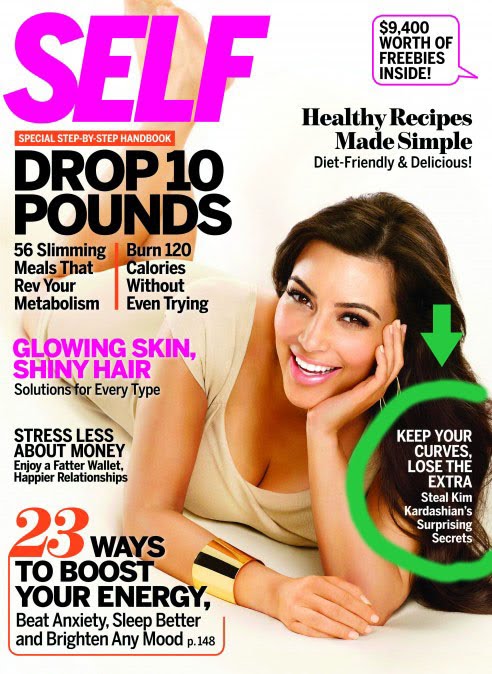
At the left: Variation #209,873 on making something completely out of one's control--body type--a fad, so as to spur impotent fanciful longing and money-spending, a reaching for an ideal that has likely SFA to do with what your own body looks like, however big it is or isn't. It is not possible, note, to move your body fat around like clay, to pad some bits ("keep your [socially-acceptable] curves") and lose the "extra." Not how the human body works.

When I was growing up it was all the same, just a different ideal: if you dieted and spent money and worked hard enough you could suddenly be a hipless preppy wonder. The ideal changes, the longing to change doesn't. "Spot-reducing exercises"...remember those? They were supposed to make the right things thin, leave the rest.

I hate when people push any look as the Real Whatever. The whole Real Women Have Curves thing, for instance, is such crap. Real women: have boobs, don't have boobs, have hips, don't have hips, are big, small, thin, fat, tall, short, blah, blah. Nobody needs the validation of "real"--any woman is a real woman. To use the word real is only, as people say, to suggest its opposite.

Tuesday, March 22, 2011

sigh

I was excited at first to see this photo in People; it's a promo shot from the new Judd Apatow movie, Bridesmaids, and, Mike & Molly aside, I am just a big Melissa McCarthy fan. Kind of hard not to be--she's so pretty and funny and there she is wearing hot shoes and skipping across the street. Go Melissa.

For some reason I had Bridesmaids conflated with another bunch-of-chicks movie and thought Melissa McCarthy had a fun part in it, but then I checked out the previews. Ungh.

I do not think fat actresses shouldn't play grotesque, macabre characters. I do not think fat actresses--any actress--should always have to look pretty or aren't allowed to risk being out there.


But--ungh. Some part of this fat girl died a little inside when I saw McCarthy's outfits. If this is The Hangover for Ladies, McCarthy seems to be Zach Galifianakis: she's the icky one. She dresses in a weird, mannish way, is artless, kinda gross, weird. Bigger people in Apatowian films are like giant gruff babies, unaware of their inappropriateness, barging around, causing problems.

I haven't seen the movie, so I'll shut up for now, but from the previews it strikes me as strange casting. McCarthy is a great comedienne and can do lots of parts (she was in the Groundlings), but she's also very pretty and feminine and not really a second-banana type--she looks more like the lead to me than Kristen Wiig. Not really sure why she gets to be the Alan Garner here, at a squint, other than size. We'll see.

Monday, March 14, 2011


Maru means round or spherical.